Helicropping is aerial no-tillage cropping. Using a suitably equipped helicopter it is cost effective and practical to establish crops or renovate pasture without compromising soil quality. Successful helicropping involves good planning including selecting the best site, integrating the crop with feed demand and pasture renewal planning, and managing risks to germination, seedling establishment and growth with effective weed, pest and fertiliser management. Pilot skill, specialised spray nozzles to limit off-target drift and appropriate fertiliser application equipment will ensure the best chance of a profitable operation.
Helicropping provides multiple benefits for farmers, including protecting the soil structure and soil biology through the no-tillage method. Helicropping reduces the time to establish a crop/pasture thus increasing the window of opportunity. A 40 ha crop can be established in 6-7 hours.
Considerations to take into account include the travel distance the helicopter will be required to fly. While crop/pasture establishment costs are similar to no till and tillage you will need access to a nearby helicopter contractor with suitable equipment. Travel distance quickly increases costs. Also, before any helicropping is undertaken, consider the class of animal to be fed and the terrain to be cropped to reduce the risks of soil degradation and loss.
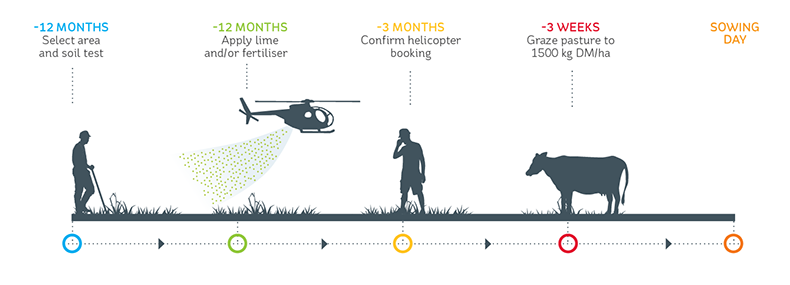
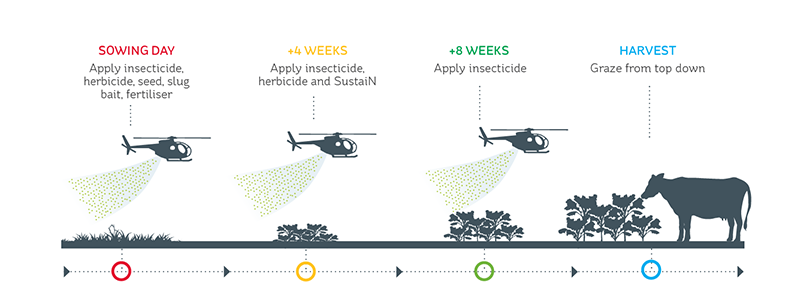
Figure 2; Sowing and post-emergence activities for a hill country crop sown by helicopter
Find out more about Helicropping:
Sustainable Farming Fund (SFF)
We want to ensure the process is environmentally sustainable, protecting our soils and water quality. We see knowledge gaps at the crop grazing phase and wish to evaluate mitigations including sediment buffers and bunds, and the role/establishment of cover and catch crops.
This work aims to influence the way forage crops and new pastures are established so that there is less cultivation undertaken.